

Loading...
November 28, 2023

The United Kingdom stands as a beacon of world-class education, offering prestigious universities and a rich academic legacy. For Indian students applying Study Visa for UK, this comprehensive guide outlines key information and requirements for a successful application.

UK’s Education Landscape

Renowned for diverse academic programs, research opportunities, and a vibrant student community, the UK provides a unique and enriching study experience. Its historical significance, breathtaking landscapes, and proximity to top industries make it a sought-after destination.

The UK Government welcomes Indian students, providing an opportunity for education in this dynamic environment. However, securing a Student Visa for UK is a prerequisite, determined by factors such as age and the type of study pursued.

Strategic arrival planning is essential. Arrive one week before for courses lasting six months or less; arrive one month before for longer courses. This ensures a smooth transition into the academic environment.

Eligibility for a UK Student Visa

To qualify, applicants must:

  • Hold an unconditional offer from a licensed UK institution with a Confirmation of Acceptance for Studies (CAS) reference number.
  • Attain a valid English-language proficiency score.
  • Demonstrate financial capability to cover living expenses and course fees.

Here is an overview of the type of study visas and their application requirements:

Visa Name Who It’s For  When to Apply Arrival in the UK
Student Visa UK Applicable to those aged 16 and above, requires application three months before the course start date 3 Months before your course start one week in advance If your course lasts six months or less, up to one month in advance, If your course lasts more than six months.


To be eligible for a UK Student Visa Requirements, you must:

  • Have acceptance of studies from a legitimate UK institution. 
  • Acceptable English proficiency test results, such as IELTS 
  • Financial proof, i.e. demonstrating sufficient funds to support yourself and pay for your course. For courses in London, you would need approximately £1,334 per month (for up to 9 months) and £1,023 per month (for up to 9 months) for courses outside of London (also known as maintenance funds).

Required Documents for Visa Application

Essential documents include:

  • Current passport or valid travel documentation.
  • Evidence of funds for living expenses.
  • CAS reference number and related documents.
  • Passport-sized color photographs.
  • Tuberculosis screening for South Asian countries.
  • Academic Technology Approval Scheme (ATAS) clearance certificate, if needed.

Additional documents required:

  • You are not a citizen of the country from which you are applying.
  • Under the age of 18
  • Have a family (dependency)

If any of your supporting documents are not in English, they must be translated. Each translated document must be dated, contain the translator’s name and signature, and be confirmed to be an accurate translation of the original document.

Applying for Your UK Student Visa Online

You must apply for your student visa online through the British Government’s official Gov.UK website. You can apply up to 6 months before your planned trip to the UK. Remember that your application date is the date you pay your application fee.

How Joy Visas Can Assist You

If you’re a student with a UK institution offer, our Visa Consultants in Pune will guide you through the process. We ensure you have the latest visa requirements, assist in document preparation, and help with certification, translation, and courier services.

To ensure you have the most up-to-date application forms and guidance, our team of experts will direct you to official websites and authorized immigration representatives. We can also certify, translate, and courier your documents to save you time. 


Do’s Don’ts
Register yourself with a General Practitioner overstaying your visa
Open a bank account Be self-employed
Get a part-time job Change your course


UK Student Visa Fee and Payment

The UK Student Visa Fees is £363 for applications outside the UK, with an additional £490 for in-country extensions or switches. Payment can be made online or through demand drafts and cash at selected Standard Chartered Bank branches.

English Language Requirements

Most UK universities require a minimum IELTS band of 6, with some accepting 5.5 for pathway and foundation courses. Certain institutions offer IELTS waivers based on English scores in the 12th standard.

Tips for a Smooth Visa Process

  • Avoid last-minute visa appointments, start the process six months in advance
  • Obtain the CAS from your university
  • Check institute licensing
  • Be mindful of the processing time.

For further information or assistance with your UK student visa, contact our Student Visa Consultants in Pune or fill out the inquiry form for personalized guidance.

September 9, 2023

If you want to pursue an education abroad. Then it is important to Apply for Student Visa. This comprehensive guide aims to provide you with a detailed roadmap for successfully applying for a student visa. 

We will cover all the Student Visa Requirements. It includes required documents, financial considerations, language proficiency requirements, and tips for a smooth application experience. By following this guide, you will be well-prepared to embark on your journey towards international education.

Understanding the Student Visa Application Process

The Student Visa Application involves several crucial steps. Begin by identifying your desired destination and researching the visa requirements specific to that country. Familiarize yourself with the necessary documents. These documents are valid passports, letters of acceptance from an educational institution, financial statements, and proof of health insurance coverage. 

It is essential to adhere to any language proficiency requirements. It often involves providing scores from standardized language tests like IELTS or TOEFL. Additionally, be aware of the application deadlines, fees, and any specific visa regulations that may apply to students from your home country.

One can also seek the help of Student Visa Consultants if needed. These consultants provide guidance to students seeking to obtain a visa for studying abroad. They offer expertise in visa application processes and document preparation. It provides valuable insights to ensure a smooth and successful visa application experience.

Gathering Required Documents

Collecting the required documents is a critical aspect of the student visa application process. This typically includes your passport, recent photographs, letter of acceptance, or admission from the educational institution. 

Additionally, before one Apply for Student Visa, they require proof of financial means to support your studies and living expenses. And health insurance coverage, and language proficiency test results. 

It is essential to review the specific requirements outlined by the embassy or consulate of your chosen study destination. Ensure that all documents are complete, accurate, and up-to-date to avoid any delays or complications during the application process.

Financial Considerations

Financial documentation is an integral part of your student visa application. You will need to demonstrate that you have sufficient funds to cover tuition fees and living expenses.

This may include bank statements, scholarship letters, or sponsorship letters. It is crucial to provide clear and verifiable evidence of your financial resources. Research the specific financial requirements set by the immigration authorities of your chosen study destination to ensure compliance.

Language Proficiency Requirements

Many countries have language proficiency requirements for student visa applicants. This typically involves demonstrating your proficiency in the language of instruction. Commonly accepted language tests include IELTS, TOEFL, or other recognized language proficiency examinations. 

Check the language proficiency requirements of your intended educational institution and study destination to understand the minimum scores required. Prepare for the language tests well in advance to ensure you achieve the necessary proficiency level before submitting your visa application.

Tips for a Smooth Application Experience

To enhance your student visa application experience, consider the following tips: 

  • Start the application process early to allow sufficient time for gathering documents.
  • Seek guidance from educational consultants or visa advisors before applying for a USA, UK, New Zealand, or Germany Student Visa.
  • Maintain clear communication with the educational institution and the embassy/consulate.
  • Carefully review and double-check all application forms and documents for accuracy.
  • Be prepared for possible interviews or additional requirements. 

So, Apply for Student Visa can be a complex process. However, with the comprehensive information provided in this guide. You are equipped with the knowledge and tools to navigate it successfully. 

July 8, 2023

Aspiring travelers to America often find themselves facing a crucial step in the visa application process: the US Visa Interview. The interview is a significant opportunity for applicants to demonstrate their eligibility and intentions to the consular officer. 

To help you prepare for this, we have compiled a list of commonly asked questions during a USA Student Visa Interview. By familiarizing yourself with these questions and crafting well-thought-out responses, you can increase your chances of a positive outcome.

1. What is the purpose of your visit to the United States?

One of the first questions you can expect during the US Visa Interview Appointment is the purpose of your trip. The consular officer wants to understand why you are traveling to the United States and ensure that your intentions align with the visa category you have applied for. 

Whether you are traveling for tourism, business, education, or any other purpose, it is essential to clearly articulate your objectives and provide supporting documents if necessary. Be concise, honest, and confident in your response.

2. How long do you plan to stay in the United States?

The consular officer will inquire about the duration of your intended stay in the United States. During your VFS Global Walk in Interview. This question helps determine the appropriate USA Visa Category for your trip and assesses your ties to your home country. 

It is crucial to provide a realistic timeframe that matches the purpose of your visit. Ensure your response aligns with your supporting documents, such as hotel reservations, travel itineraries, or enrollment letters from educational institutions. You can take the help of Student Visa Consultants for compiling the documents. 

3. What ties do you have to your home country?

To ensure that you have strong ties to your home country, the consular officer will likely ask about your connections there. They want to determine whether you have sufficient reasons to return after your trip & whether you are a potential immigration risk. 

Some examples of ties to your home country include family, employment, property ownership, and ongoing studies. Or any other commitments that demonstrate your intent to return. Provide relevant details and documents to support your answer during Visa Interview Appointment.

4. Have you been to the United States before?

If you have visited the United States in the past, the consular officer will inquire about your previous travel history. They will want to know whether you complied with the terms of your previous visa. And returned to your home country within the authorized period. 

It is essential to be truthful in your response, as the consular officer has access to your travel records. If you had a positive experience during your previous visits, you can mention it briefly to showcase your adherence to immigration regulations.

5. What do you do for a living?

The consular officer may ask about your current employment or source of income during the Interview for US Visa. They want to ascertain whether you have stable employment, a steady income, or sufficient financial means to support your travel and stay in the United States. 

Provide accurate information about your occupation, position, employer, and any supporting documents that demonstrate your employment status, such as employment letters, Pay Stubs, or tax returns.

Successfully navigating the USA Visa Interview requires thorough preparation and confident communication. By anticipating and practicing responses to the five most commonly asked questions, you can approach your interview with ease and improve your chances of obtaining the visa. 

Remember to provide concise and honest answers, support your responses with relevant documentation, and demonstrate strong ties to your home country. Good luck with your visa interview and enjoy your journey to the United States!

June 30, 2023
June 30, 2023

A comprehensive Guide to Studying Abroad is essential for those seeking a life-changing experience full of abundant opportunities for personal and academic development. It serves as a valuable resource to make informed decisions and adequately prepare for the necessary steps involved in studying abroad.

In this comprehensive step-by-step guide, we will walk you through each stage of studying abroad, from initial research to arriving at your dream destination. So, grab a notebook, and let’s embark on this exciting journey together!

Step 1: Research Your Options

The first Guide to Studying Abroad is to conduct thorough research about the various study destinations available to you. Consider factors such as preferred countries, universities, academic programs, language requirements, cost of living, and cultural aspects. 

Utilize online resources, university websites, and study abroad fairs, and seek Student Visa Consultants in Pune to gather as much information as possible. This research phase will help you narrow down your options and make an informed decision.

Step 2: Financial Planning

Crucial Study Abroad Advice is having significant financial commitment. Take the time to assess your financial situation and plan accordingly. Research scholarships, grants, and other funding opportunities that are specifically available to international students. 

Calculate your estimated expenses, including tuition fees, accommodation, living costs, transportation, health insurance, and travel expenses. Create a budget and explore options for part-time work or student loans if necessary.

Step 3: Choose the Right Program and University

Based on your research, identify the study abroad programs and Best Colleges in USA or other chosen destination. That aligns with your academic goals and interests. Consider factors such as program reputation, course offerings, faculty expertise, campus facilities, internship opportunities, and support services for international students. 

Review admission requirements, application deadlines, and any additional prerequisites for your chosen program or university.

Step 4: Application Process

Once you have selected your preferred study abroad program or university, it’s time to start the application process. Carefully review the application requirements and gather the necessary documents, including academic transcripts, letters of recommendation, language proficiency test scores, and essays. Pay attention to any specific guidelines provided by the institution and ensure your application is complete and submitted before the deadline.

Step 5: Financing Your Study Abroad Journey

After receiving acceptance from your chosen institution, revisit your financial plan. Confirm the total cost of your study abroad program and explore additional funding opportunities such as grants, sponsorships, and crowdfunding platforms. 

Apply for scholarships specifically designed for international students, and follow up on any pending applications. Make sure to meet all funding requirements and deadlines.

Step 6: Visa and Travel Arrangements

Obtaining the necessary visa and making travel arrangements is a crucial step in studying abroad. Research the requirements for New Zealand Student Visa or for other countries. And initiate the visa application process well in advance. 

Prepare the required documentation, such as a passport, acceptance letter, financial statements, and proof of health insurance. Book your flights and arrange for airport transfers. Don’t forget to consider travel insurance for added protection during your journey.

Step 7: Preparing for Departure

As your departure date approaches, there are several important tasks to complete. Secure accommodation, either through the university or private rentals, and make any necessary housing deposits. 

Notify your home institution, bank, and any relevant authorities about your temporary absence. Arrange for the transfer of academic credits, if applicable. Another piece of Advice for Students Studying Abroad is to create copies of essential documents, including passport, visa, and academic records, and store them separately for safe keeping.

Step 8: Arriving and Settling In

Once you arrive at your Study Abroad Destinations, take some time to settle in and adjust to your new surroundings. Attend orientation programs organized by your university to familiarize yourself with the campus, academic procedures, and support services. 

Explore the local area, find your way around, and establish a routine. Connect with other international students and engage in cultural activities to expand your network and fully embrace the experience.

Step 9: Academic Success and Cultural Integration

While studying abroad, strive for academic excellence by attending classes regularly, actively participating in discussions, and seeking assistance from professors or tutors when needed. Immerse yourself in the local culture by learning the language, trying new cuisines, and engaging in community events. 

Build relationships with local students and immerse yourself in extracurricular activities that align with your interests. Embrace new experiences and step out of your comfort zone to make the most of your time abroad.

Overall, Studying abroad is a transformative experience that opens doors to new perspectives, personal growth, and lifelong memories. By following this step-by-step guide, you can navigate the complex process of studying abroad with confidence and ease. 

Remember to plan ahead, conduct thorough research, and stay organized throughout the journey. Embrace the challenges and opportunities that come your way, and make the most of this incredible chance to expand your horizons and become a global citizen. Good luck with your study-abroad adventure!

June 30, 2023

The IELTS is one of the most widely recognized English language proficiency tests worldwide. It is important to know About IELTS Test, from its purpose and test format to tips for preparation and scoring. 

Whether you are planning to study, work, or immigrate to an English-speaking country, the IELTS test plays a crucial role in assessing your language skills. 

Purpose of the IELTS Test

The IELTS test is designed to assess the English Language Proficiency of individuals who are non-native speakers of English. It is recognized by thousands of organizations, including universities, employers, immigration authorities, and professional bodies, as a reliable measure of an individual’s ability to communicate effectively in English.

For individuals aspiring to pursue higher education in English-speaking countries and apply for a USA Student Visa or Australia Student Visa, then taking the IELTS exam is a mandatory part of the visa application process.

Test Format

The IELTS test is divided into four sections: Listening, Reading, Writing, and Speaking. The total test duration is approximately 2 hours and 45 minutes.

Listening: This section consists of four recorded monologues and conversations. Candidates listen to the recordings and answer a series of questions. The duration is 30 minutes.

Reading: The Reading section consists of three long passages with a variety of question types. Candidates are required to read the passages and answer the questions within a time limit of 60 minutes.

Writing: In the Writing section, candidates are given two tasks. Task 1 requires candidates to describe, summarize, or explain visual information, while Task 2 requires them to write an essay on a given topic. The time limit for this section is 60 minutes.

Speaking: The Speaking section assesses the candidate’s spoken English skills. It is conducted in the form of a face-to-face interview with a certified examiner and is divided into three parts. The duration is approximately 11–14 minutes.

You can enhance your test preparation by utilizing the available IELTS Sample Paper Online. Engaging with these practice papers will help you familiarize yourself with the test format and content. Moreover, it will enable you to be better prepared for the examination.

Test Scoring

IELTS uses a Band Scoring System to assess candidates’ language proficiency. Each section (Listening, Reading, Writing, and Speaking) receives a band score out of 9, and an overall band score is calculated as an average of the four individual scores. The band scores range from 1 (non-user) to 9 (expert user).

Test Preparation Tips

Preparing for the IELTS Online Test is essential to achieve a satisfactory score. Here are some tips to help you prepare effectively:

  • Familiarize yourself with the test format and question types.
  • Practice regularly using official IELTS Preparation Materials and sample tests.
  • Develop your vocabulary and grammar skills by reading English books, newspapers, and magazines.
  • Practice listening to English conversations, lectures, and podcasts to improve your listening skills.
  • Enhance your writing skills by practicing different types of essays and getting feedback from an experienced English teacher or tutor.
  • Engage in English conversations with native speakers or language partners to improve your speaking skills.

Test-Day Tips

On the day of the test, keep the following tips About IELTS Test in mind:

  • Get a good night’s sleep before the test day to stay focused and alert.
  • Eat a nutritious breakfast to fuel your brain.
  • Arrive at the test center early to avoid unnecessary stress.
  • Follow all instructions carefully during the test.
  • Manage your time wisely and allocate sufficient time for each section.
  • Stay calm and confident throughout the test.

The IELTS test is a comprehensive assessment of your English language proficiency. And it is widely accepted by universities, employers, and immigration authorities around the world. By understanding the test format, preparing effectively, and adopting good test-day strategies, you can increase your chances of achieving a desirable score.

June 30, 2023

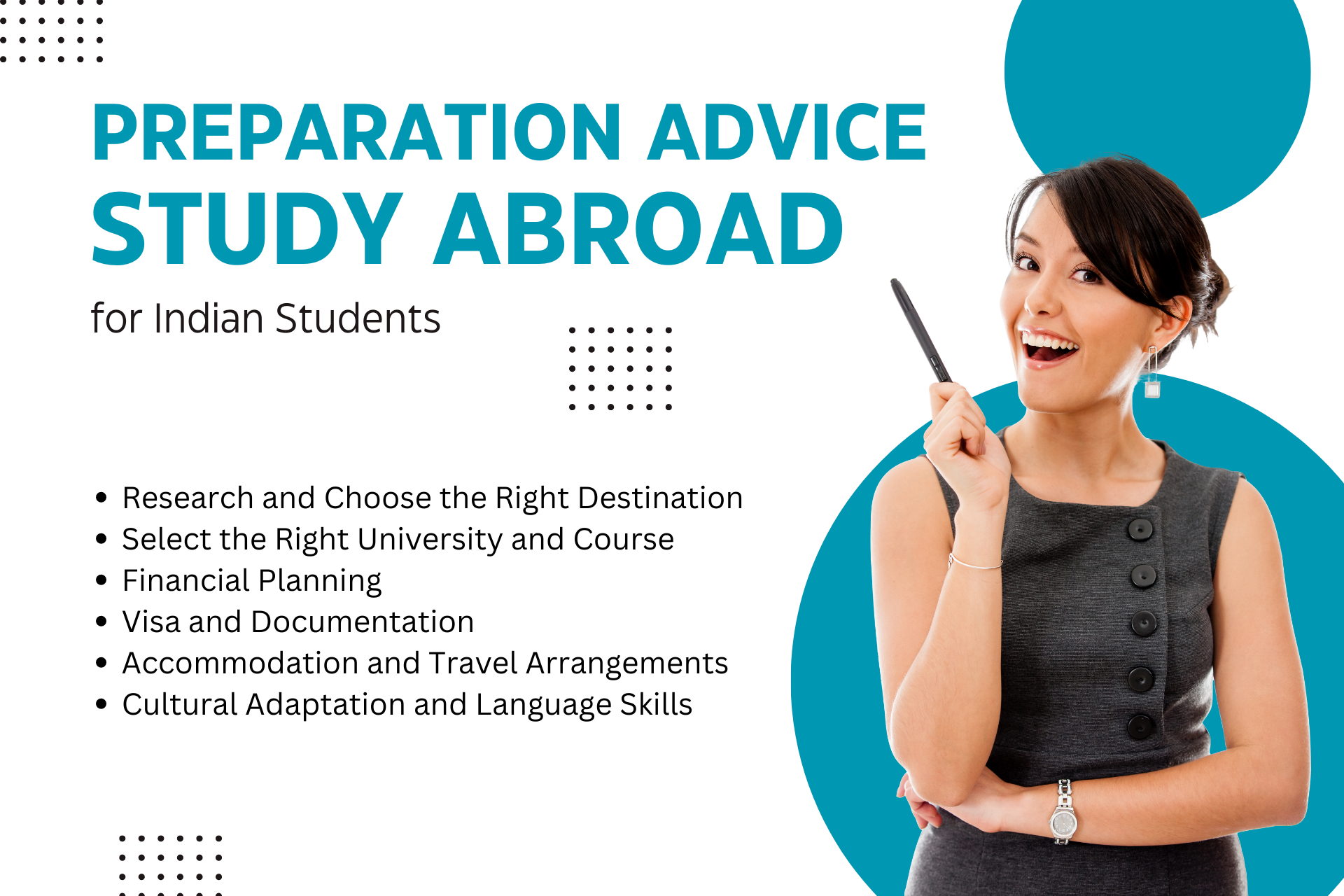
In this blog, we will provide the Best Preparation Advice Study Abroad for Indian Students who are planning to study abroad. Covering everything from choosing the right destination and university to financial planning and cultural adaptation.

Every year, a significant number of Indian students choose to pursue their higher education abroad. However, Study in USA, Germany, and France requires careful planning and preparation.  Studying in a foreign country offers immense opportunities for personal growth, exposure to diverse cultures, and access to a world-class education. 

Research and Choose the Right Destination

The first Advice Study Abroad is to research and select the most suitable destination for your education. Consider factors such as the quality of education, available courses, cost of living, safety, and employment prospects. Popular destinations among Indian students include the United States, United Kingdom, Canada, Australia, and Germany.

Select the Right University and Course

Once you have chosen your desired destination, thoroughly research universities and programs that align with your academic goals and interests. Consider the university’s rankings, faculty expertise, curriculum, industry connections, and research opportunities. Make sure to review admission requirements, including Language Proficiency Tests such as the TOEFL, IELTS, and many more.

Financial Planning

Studying abroad involves significant financial implications. Create a realistic budget, taking into account tuition fees, living expenses, accommodation, travel costs, and health insurance. Explore scholarships, grants, and financial aid options specifically designed for international students. Research part-time job opportunities available for students in your chosen destination to supplement your finances.

Visa and Documentation

Familiarize yourself with the visa requirements and application process for your chosen country. Compile all necessary documents, such as admission letters, financial statements, academic transcripts, and a valid passport. 

Obtaining a Student Visa for Germany, the USA, and Italy is often perceived as a time-consuming and challenging process. Hence, Start the Visa Application Process well in advance to allow for any unforeseen delays.

Accommodation and Travel Arrangements

Arrange for suitable accommodation near your university. Explore options such as university dormitories, shared apartments, or homestays. Book your flights well in advance to secure the best deals and plan your travel itinerary accordingly. Research local transportation options and understand the public transportation system of your destination.

Cultural Adaptation and Language Skills

Prepare yourself for cultural differences and adaptability challenges. Learn about the local customs, traditions, and social norms of your host country. Develop your language skills, particularly if English is not your first language. Practice speaking and listening through language exchange programs, online resources, and language courses.

Health and Insurance

Ensure you have comprehensive Health Insurance Coverage for the duration of your studies abroad. Familiarize yourself with the healthcare system in your host country and understand how to access medical services if needed. Get any necessary vaccinations before traveling to ensure you meet the health requirements.

Stay Connected with Family and Friends

Studying in a foreign country can be filled with both excitement and a set of unique challenges. Stay connected with your family and friends back home through regular communication, video calls, and social media. Share your experiences and seek their support during your transition.

Prepare for Academic Life

Research the academic system and teaching methodologies of your chosen university. Understand the course requirements, assessment methods, and academic resources available to you. Develop effective study habits, time management skills, and critical thinking abilities to succeed academically.

Embrace New Experiences

Finally, be open to new experiences, cultures, and perspectives. Engage in student clubs, organizations, and extracurricular activities to expand your network, make friends, and immerse yourself in the local community. Take advantage of travel opportunities to explore your host country and neighboring regions.

Overall, preparing to study abroad requires careful planning, research, and preparation. Seeking Advice Study Abroad from Visa Consultancy Pune can help students to make informed decisions, ensure a smooth transition, and maximize their chances of a successful study abroad experience. 

Remember to embrace the journey with an open mind, as studying abroad offers a unique opportunity for personal and academic growth. Best of luck in your educational endeavors abroad!

June 30, 2023

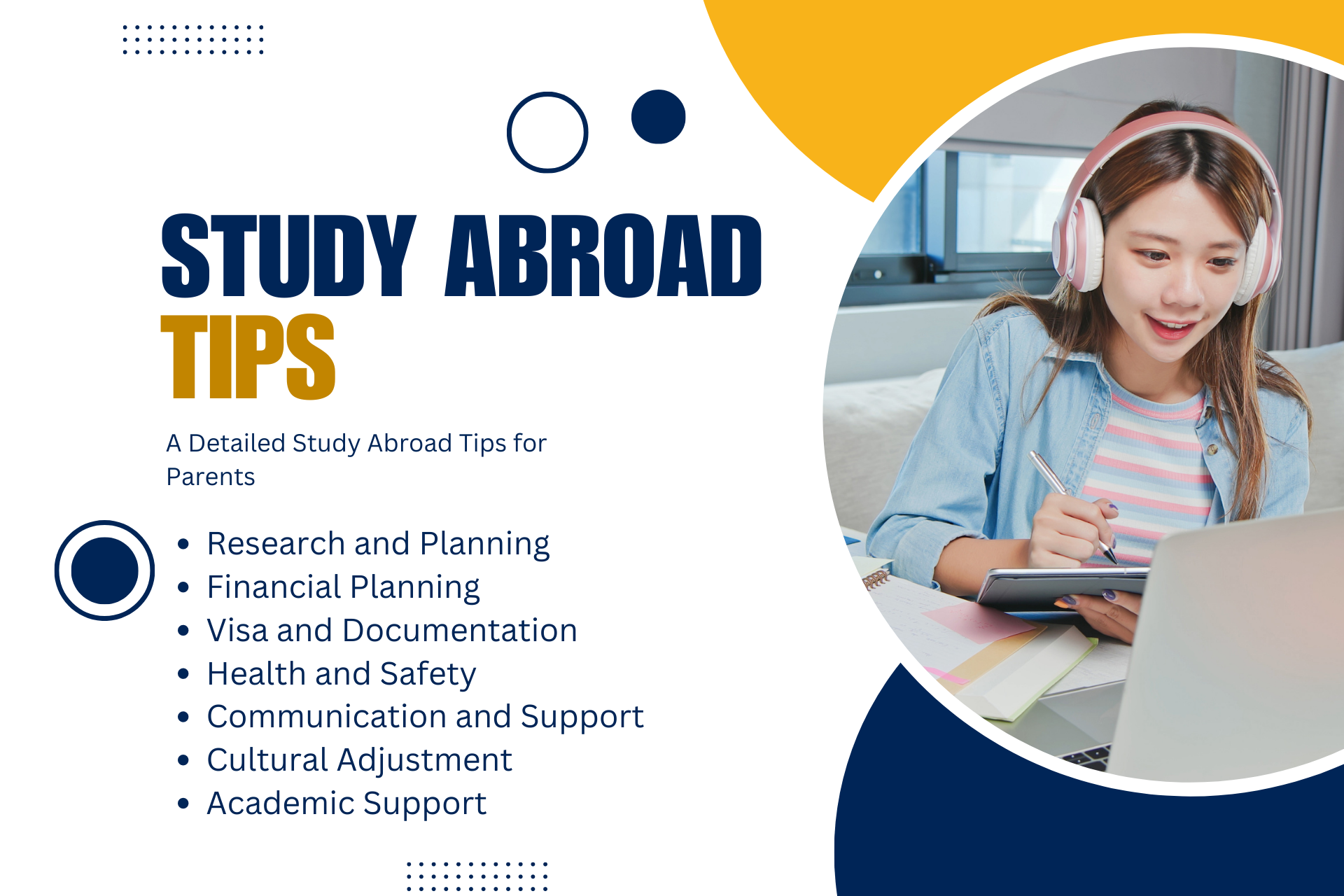
Sending a child to study abroad can be an exciting yet daunting experience for parents. Here are some Study Abroad Tips for parents that are valuable and practical. These tips help in supporting their child’s study abroad journey that can alleviate concerns. Moreover, it ensures a seamless transition for both you and your child.

1. Research and Planning

The primary Study Abroad Advice is to research different study-abroad destinations and universities with your child. Consider factors such as academic reputation, program offerings, safety, cost of living, and cultural environment. Engage in discussions with your child to understand their academic and personal goals, as well as their preferred study abroad location.

2. Financial Planning

Studying abroad involves financial considerations. Study Abroad Recommendations for Parents to work together with their children to create a budget that includes tuition fees, living expenses, travel costs, and insurance. Discovering Scholarship Opportunities and Financial Aid for International Students. Encourage your child to seek part-time employment opportunities to supplement their income.

3. Visa and Documentation

Familiarize yourself with the Student Visa Requirements and documentation needed for your child’s chosen study-abroad destination. If needed, you can hire Visa Consultants in Pune who can assist you and your child in gathering the necessary paperwork. Ensure that all documents are up-to-date and submitted within the designated timelines.

4. Health and Safety

Discuss health and safety precautions with your child. Research the healthcare system of the host country and ensure that your child has appropriate Health Insurance Coverage. Familiarize yourselves with emergency contact information and local laws and customs. Encourage your child to stay informed about their surroundings and to follow safety guidelines provided by the university.

5. Communication and Support

Another Study Abroad Tips and Tricks is to establish open lines of communication with your child before they leave. And maintain regular contact while they are abroad. Technology makes it easier to stay connected through phone calls, video chats, and messaging apps. Encourage your child to share their experiences, challenges, and achievements with you. 

6. Cultural Adjustment

Prepare your child for the cultural differences they may encounter. Discuss the cultural norms, traditions, and customs of the host country. Encourage them to be open-minded, respectful, and adaptable. Remind them that it’s natural to experience culture shock initially, but that it will subside with time and exposure to the new environment.

7. Academic Support

Understand the academic structure and expectations of the host country’s education system. Encourage your child to make use of academic resources, such as libraries, study groups, and tutoring services provided by the university. Remind them to maintain a balance between academics and personal well-being.

8. Encourage Independence and Growth

Studying abroad is a transformative experience that promotes personal growth and independence. Important Advice for Students Studying Abroad is to take initiative, make decisions, and solve problems on their own. This will foster resilience, self-confidence, and a sense of responsibility. 

9. Visit Your Child

If feasible, plan a visit to your child during their study abroad experience. It allows you to witness their growth, experience their new environment, and offer support in person. It also provides an opportunity to explore the host country together and create lasting memories.

10. Celebrate Achievements

Take the time to acknowledge and celebrate the achievements of your child, whether they are major milestones or small victories. Show appreciation for their academic accomplishments, personal development, and the enriching cultural experiences they have encountered. This will boost their confidence and motivate them to continue striving for excellence.

As a parent, supporting your child’s study abroad journey involves thorough research, open communication, and providing practical assistance. By familiarizing yourself with the process and actively engaging with your child, you can ensure their well-being, academic success, and overall positive experience while studying abroad. 

Embrace this opportunity for growth and cultural exchange, knowing that you have played a crucial role in shaping your child’s educational journey.

June 30, 2023

Embarking on higher education in a foreign land can bring transformative experiences. But navigating and meeting the Student Visa Requirements of your chosen destination can be a crucial part of the journey.

In this blog, we will provide a comprehensive guide to mapping global student visa requirements. It includes the key documents, application process, and important considerations for popular study destinations around the world.

United States

The USA is one of the famous destinations, for international students. To obtain a USA Student Visa (F-1 or M-1), you will typically need an acceptance letter from a Student & Exchange Visitor Program (SEVP)-approved institution. 

Additionally, you need proof of financial resources, a completed Form DS-160, a valid passport, and payment of the SEVIS Fee. You will also need to arrange an interview at the U.S. embassy or consulate as part of the application process.

United Kingdom

For studying in the United Kingdom, you will need a Tier 4 (General) student visa. The requirements include an unconditional offer from a recognized educational institution and proof of financial capacity. 

Besides that, you will be needing a valid Confirmation of Acceptance for Studies (CAS) from your sponsor institution, a completed visa application form, and payment of the visa fee. Additionally, you may be required to provide biometric information.

Canada

To study in Canada, you will typically require a study permit. The requirements include an acceptance letter from a designated learning institution (DLI) and proof of financial support. Additionally, you will be required a completed application form, a valid passport, and payment of the application fee. In certain instances, the submission of biometric information may be a requirement.

Australia

For studying in Australia, you will need a Student Visa (subclass 500). The requirement for a Student Visa in Australia is a Confirmation of Enrolment (CoE) from a recognized educational institution in Australia.

The requirements include a Confirmation of Enrolment (CoE) from a registered Australian educational institution. Proof of financial capability, a completed visa application form, a valid passport, and payment of the visa fee. English language proficiency tests may also be required.

Germany

Germany is renowned for its exceptional quality education and its commitment to providing affordable or tuition-free education. You will require a Germany Student Visa to study there. The requirements typically include an admission letter from a German university and proof of financial resources. 

Moreover, you will be needed health insurance coverage, a completed visa application form, a valid passport, and payment of the visa fee. In addition, it may be necessary to provide biometric data as part of the student visa application process.

France

For studying in France, you will generally need a Long Stay Student Visa (Visa de long séjour pour études). The requirements include an acceptance letter from a French educational institution, proof of financial means, and health insurance coverage. 

Additionally, applicants must complete a visa application form, possess a valid passport, and pay the necessary visa fee. Depending on your nationality, you may also need to undergo a Campus France interview.

New Zealand

One needs Student Visa for New Zealand, in order to study there. The requirements include an offer of place from a New Zealand educational institution, proof of financial capability, a completed Visa Application Form, a valid passport, and payment of the visa fee. You may also need to provide medical and/or police certificates.

Singapore

For studying in Singapore, you will mostly need a Student’s Pass. The requirements include an acceptance letter from a Singapore educational institution, proof of financial capacity, a completed application form, a valid passport, and payment of the application fee. You may be needed to undergo medical examinations.

Important Considerations:

Application Timelines: To ensure a smooth visa application process and account for any potential unforeseen delays, it is essential to initiate the visa application well in advance, allowing ample time for processing.

Financial Documentation: Most countries require proof of sufficient funds to cover tuition fees, living expenses, and healthcare costs.

Health Insurance: Many countries mandate health insurance coverage for international students.

English Language Proficiency: English-speaking countries often require proof of English language proficiency through tests such as IELTS or TOEFL.

Biometrics: Some countries require applicants to provide biometric data as part of the visa application process.

Mapping global Student Visa Requirements is an essential step for international students planning to pursue their education abroad. Each country has its specific visa requirements, application processes, and considerations. It is crucial to thoroughly research and understand the requirements of your desired study destination.

To make the visa application process smooth and successful. Consulting with the respective embassies or consulates, as well as university international student offices, can provide valuable guidance and assistance. Prepare early, gather all the necessary documents, and embark on your educational journey with confidence.